Welcome to Farmland Insider. We analyze deals across FarmTogether, AcreTrader, FarmFolio, and other farmland investment platforms.
(New here? Read our primer on farmland investing)
For our second farmland analysis, we look at an avocado farm from the Land Down Under being offered by AcreTrader – The Mareeba Avocado Orchard in Queensland, Australia.
Let’s go
Table of Contents
Offering at a Glance
- Platform: AcreTrader
- Available: November 17th
- Location: Queensland, Australia
- Crop type: Permanent
- Crops: Avocados
- Capital being raised: $8,365,000
- Acres: 415.5
- Price per Acre: $20,132
- Price per Farm Acre: $22,031
- Est. Ownership Duration: 10-12 years
- Min. Investment: $35,000
- Average Net Cash Yield: 10.6%
- Net Annual Return: 12.8%
About The Farm
Crops
The farm currently grows avocados on 240 acres and a mix of citrus (mangos/lychees/lemons) on 139 acres.
The citrus acres will be replanted as avocados, so the future output of the farm will be 100% avocados (64% Shepard/34% Hess).
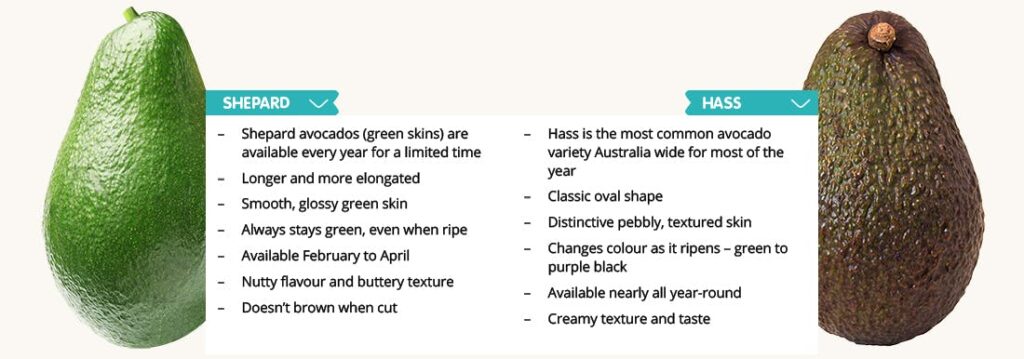
This transition is expected to take two years (2022-2023). Avocados take 4 to 5 years to reach maturity. The current avocado acreage will continue to produce while the newly planted acres mature.
Avocados are a permanent crop that carries a higher risk profile than annual crops, which are replanted each year. Permanent crops take multiple years to mature (exposing them to loss due to drought and other environmental conditions) and additional upfront capital in the costs of the young trees.
Summary: The orchid has an elevated risk level due to singular concentration of crop type and long lead time for maturity and production
Geography
The farm comprises four non-contiguous plots in Paddy’s Green – a rural locality in Mareeba, Queensland. Queensland produces 69% of Australia’s avocados, with Western Australia the other top region.
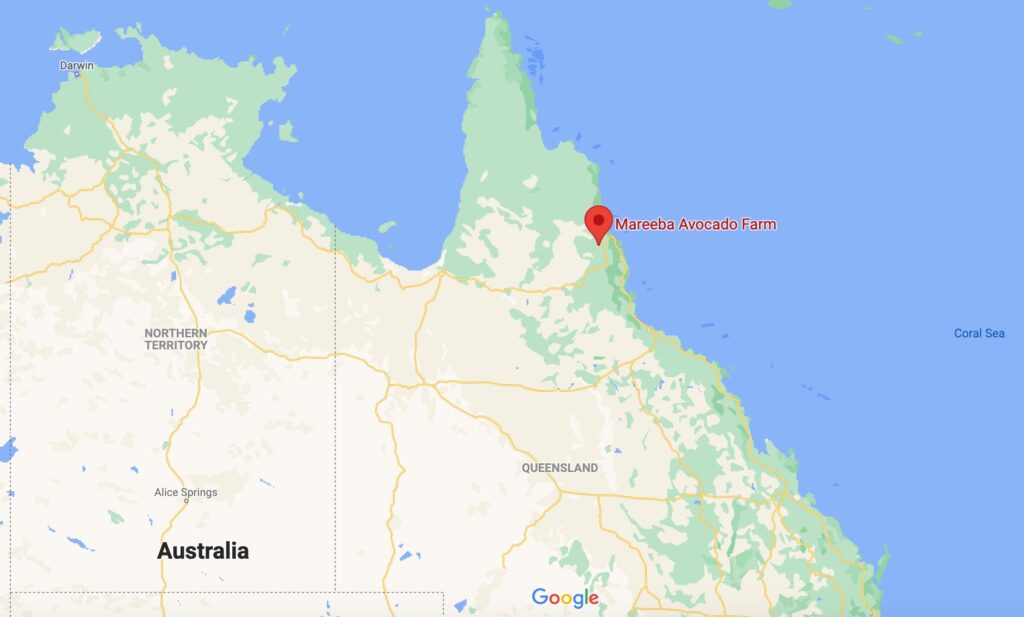
The Mareeba region averages 30 inches of rainfall per year, but Queensland has experienced severe drought conditions over the last few years. 2021 saw a return to normal rainfall levels, leading to a record crop (more on this below).
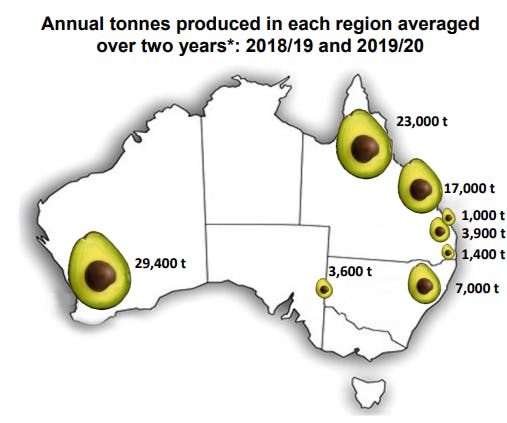
Summary: Australia and Queensland have favorable climates for avocado growth, especially in a record year in 2021, but the region has a recent history of drought
Water Rights
The orchard has access to 1,552 megalitres of water per year. The water is sourced from permanent entitlements (460), well water (942), and on-farm storage and spring water (150).
- Avocados require 5 megalitres of water reserves per hectare per year in an area that receives 60 inches of annual rainfall.
- The Mareeba region, as noted above, receives 30 inches of rainfall in an average year.
- The avocado farm will require 10 megalitres of water reserves per hectare.
- The Mareeba orchard has 153 hectares, so 1,530 megalitres of reserves are required.
Summary: Water infrastructure is sufficient for current needs. Improving rainfall conditions would lessen the need for water reserves
Access to Infrastructure/Capital Expenditures Required
The farm currently produces avocados and citrus, so no initial expenditures will be required for harvesting or infrastructure purposes.
However, management plans to convert the citrus portion of the farm to avocados over two years. The managers project that this will cost $2.7 million USD.
Summary: The time and expense required to convert the farm to 100% avocados elevate the risk profile due to potential time and budget overruns
Owners/Management
In addition to the funds raised through the AcreTrader offering, the deal’s sponsor, Aqua Ceres LLC, will contribute $250,000 of capital. The sponsor’s role is to bring the offering to AcreTrader and work with them to take the deal to market. Sam Mitchell is one of the principals of Aqua Ceres.
Wealthcheck, a farm management company, will perform the day-to-day operations of the ranch. Sam Mitchell is the founder and owner of Wealthcheck, which creates related parties between Wealthcheck and Aqua Ceres, but this type of relationship is often seen in the sponsor/farm management structure. Wealthcheck manages over 100,000 acres of farmland in Australia, including 2,500 acres of avocados in Queensland.
Summary: No red flags. Management and owners have prior experience in the avocado industry
Economics of the Deal
Purchase Price
The purchase price of the orchid is $13.1 million USD (includes government fee and other upfront costs, including procurement fee). This equals $34,473 per farmable acre or $31,528 per acre.
The price per acre is higher than recent comparable sales and orchids currently on the market
- Kirkkady Avocado Orchid Sale – September 2021 ($20,568/acre)
- Mountain Top Avocado Orchid Sale – September 2021 ($27,785/acre)
- South Isis, Queensland Avocado Orchard – On Market ($21,846/acre)
NOTE: AUD/USD FX rate of .73 is used in the above figures; 1 hectare = 2.47 acres.
The prices per acre for the Mareena Orchid include a procurement fee of 4% ($610,000 USD) paid to Aqua Ceres.
Summary: Purchase price per acre higher than recent avocado farm sales in Queensland and New South Wales region
Cash Flows
Cash will be generated from the sale of the avocados and eventually from the sale of the farm.
The sale of the farm is projected to occur in 10 to 12 years, but this will depend on market conditions and securing a favorable price. There is currently no secondary market for AcreTrader shares.
An investment should be viewed as a ten-year lockup of funds, with the potential of an earlier/later exit based on the farm sale date.
Since there is no tenant farmer paying rent, market prices for avocados and land appreciation projections become the critical analysis points.
There was no current contract for the orchid’s avocado output noted in the offering documents on the AcreTrader site. The assumption is that the avocados will be sold at spot wholesale prices. Acretrader used a forecast of 3.30 AUD/kg in their return projections over the ten-year analysis period.
Unfortunately, the Australian avocado market is currently at rock bottom prices. New South Wales avocados now sell for 1 AUD/kg, a price at which most farmers are losing money. 1 AUD/kg is the same price avocados sold for in 2004.
The double whammy of a recent spike in supply and a decrease in demand is driving the sharp drop in avocado prices. Australian avocado production has doubled over the past decade and has risen 65% alone in 2021 (helped by the end of drought conditions in producing regions). Tens of thousands of avocado trees were planted three to four years ago and are reaching productive maturity.
The coronavirus lockdowns affected the demand side as restaurants and other commercial venues shut down. The recent easing of lockdown restrictions should increase demand, but not enough to offset the current oversupply.
Exports are a possible sales outlet, but Australia currently only exports 4% of production and is a net importer of avocados, so exports will not alleviate much of the supply.
The oversupply will take time to correct. The country is projected to produce around 170,000 tons of avocados in 2026, almost double what was grown in 2020, according to Avocados Australia. The constant increase in new supply should act as a price cap and only allow for a slow multi-year recovery.
Another component of the overall return is the land appreciation and eventual projected sale in year ten. AcreTrader projects a 55% appreciation over the ten years (5.5% annual). Australian farmland increased by 12.9% in 2020 and 7.6% annually over the previous 20 year period.
Queensland farm values rose by 11.9% in 2020. These figures represent all farmland, including land used for raising livestock, so it isn’t an exact comparison. Assuming a lower growth rate for avocado farmland due to the long-term market prospects, the 5.5% annual figure used in the return projections appears reasonable.

Summary: The depressed avocado market due to a combination of oversupply (long-term) and coronavirus lockdowns (short-term) cap the price of avocados well below the projections used by AcreTrader in their cited returns
Additional Financial Considerations
The company is assuming debt as part of the purchase of the orchid. $7.2 million USD debt will be obtained to finance the acquisition and development of the additional avocado acres. At 55% of the purchase price, this is a high debt to land value ratio.
Wealthcheck will receive a 1.5% annual management fee for its oversight of the farm. The fee is higher than other recent offerings on AcreTrader and other fractional farm platforms (.75 – 1.3%). The 4% procurement fee ($610,000) also eats into the returns to shareholders.
Initial distributions to shareholders are projected to start in 2022 (9.1%). Distributions will decrease over the next two years as the citrus acreage is converted to avocados. The yearly returns are projected to average 10.3% in years 1 – 9.
These returns seem aggressive due to the depressed avocado market.
Recommendation
We are not recommending an investment in this offering.
When diving into the details of the Mareeba Avocado Orchid, the risks outnumber the benefits and the offering should be considered the pits (in my contract, Stefan allows me one pun per article):
Pros
- Water rights and other sources of supply are sufficient for adequate irrigation.
- The management team has prior experience in Australian farmland management and avocado farm management.
Cons
- The avocado market is at historic lows with no short-term rebound insight as additional supply comes onto the market over the next five to six years.
- The purchase price of the ranch is higher than recent comparable sales.
- High debt to land value could reduce operational flexibility and decrease returns to shareholders.
- Conversion of citrus acres to avocados carries a risk of time and budget over-runs and will make the orchid 100% dependent on one crop market.
- Higher than standard management fees and a high procurement fee reduce shareholder returns.
- As with all fractional farmland investments, liquidity of shares is practically non-existent; investors should plan for a ten-year investment horizon.
We believe the risks presented by the cyclically depressed avocado market threaten the projected returns.
Score: 5/10