Hello and welcome to Alts Cafe.
A curated pour of the week’s most important alt investing stories, customized and brewed to your liking.
Table of Contents
Highlights
- Artwork: Masterworks shares lose their trading venue eight weeks early
- International Investing: Jio Platforms jumps 21% in its debut after India’s biggest IPO
- Startups & VC: Anthropic files to go public with $16.3 billion in first-half revenue
- Sports: The NFL is turning 32 Equity into a fund with General Atlantic
- Prediction Markets: Polymarket gave Lula about a 20% chance, then he won
- Music & Film: Songwriters can now reclaim their rights worldwide after the Supreme Court steps aside
- Crypto: CoreWeave, Broadcom and Verizon say no to tokenized shares
- Real Estate: Two Sigma shelves its real estate fund after missing its target
- Private Equity & Private Credit: Ares Capital buys Apollo’s MidCap at a premium to price and a discount to NAV
- Precious Metals and Gems: Yttrium costs 128 times more outside China
- Farmland: Canada’s maple syrup reserve runs dry
- Wine, Whiskey & Spirits: Gen Z bidders help Henry Tang’s cellar fetch HK$50.2 million
- Collectibles, Culture and Luxury: A T. rex cousin named Jodi sells for $47.3 million
Artwork
- Masterworks’ Vault shares stopped trading on PPEX eight weeks early and moved to a bulletin board that doesn’t match orders
- Monet’s “Iris” sold for about $56.2 million at Sotheby’s Paris, a record for any auction in France
- A Roman marble torso fetched $34.3 million, an all-time record for a Roman artifact
- Art Basel Paris shut early and pulled its public sculptures amid the riots
- Sotheby’s will hold its first fine art auction in Abu Dhabi in December, led by Monet and Warhol
Why it matters: Masterworks just lost its exit
Filings from Masterworks Vault 1 through 5 say their shares stopped trading on PPEX on October 19, about eight weeks before the expected December date.
Shares moved to a Masterworks bulletin board that doesn’t match buy and sell orders, and where “transaction volume is expected to be extremely low,” in the company’s own words.
The timing is awkward. Days earlier, four of the Vaults disclosed they kept selling about $4.78 million of shares after their offering statements expired.
Those buyers may hold rescission rights, and the filings say the series lack cash reserves to pay them.
What holders should understand.
- A bulletin board only posts interest. Buyers and sellers are left to find each other.
- Art could be sold early. If Masterworks, LLC doesn’t cover rescission claims, the filings say artwork may have to be sold on unfavorable terms.
The paintings themselves may hold their value. The shares are simply harder to turn into cash.
That’s the core trade-off in every fractional platform, and secondary boards like RealBricks show the same pattern of asks with no bids.
Watch the rescission claims. How much gets claimed, and who pays, decides whether holders lose art or just time.
International Investing
Around the world…
- 🇧🇷 Lula’s comeback win sent the iShares Brazil ETF down nearly 20% overnight as investors unwound the Bolsonaro trade
- 🇮🇳 Jio Platforms listed at a 21% premium after India’s largest-ever IPO, becoming the country’s second-most valuable company
- 🇸🇬 Indonesia began trimming pipeline gas exports to Singapore, its biggest customer, saying it’s in “survival mode” at home
- 🇨🇳 China’s economy grew 4.5% in the third quarter while property investment fell 20.6% through September
Why it matters: India’s biggest IPO came with a pop
Emerging market IPOs have had a rough year, but Jio Platforms just had a great day.
Shares opened at ₹1,358 against a ₹1,119 issue price, a 21.36% premium that lifted its market value to about $131 billion.
That makes Reliance’s telecom and digital arm India’s second-most valuable listed company on day one — subscribed 22 times over.
Anchor buyers included BlackRock, Singapore’s government and the Abu Dhabi Investment Authority.
Retail showed up too. The offer became the first anywhere to draw 10 million applications.
Startups & VC
- Anthropic filed to list on Nasdaq under the ticker ANT, reporting $16.3 billion of first-half revenue, up 1,300%
- Meta plans to raise up to $95 billion in stock, including a $60 billion at-the-market program of new nonvoting shares
- DeepSeek reportedly raised about $15 billion, one of China’s largest rounds ever, two days after a US federal ban on its models
- OpenAI is finalizing a $30 billion round at a $1.25 trillion valuation, $150 billion below the figure discussed earlier
- A record 8,625 US startups raised their first round through September, already beating 2021’s full year
- Secondary platform EquityZen saw transactions jump over 50% in the third quarter, led by AI names
- Palmer Luckey and Ben Lamm’s Warhound raised $200 million to develop genetically enhanced military dogs
Why it matters: Anthropic’s books are finally public
Anthropic’s S-1 shows $16.3 billion of revenue in the first half, up from $1.16 billion a year earlier, with $11.6 billion in the second quarter alone.
The second quarter also produced its first operating profit, $974 million.
The headline net loss of $80.7 billion is mostly a $72.4 billion noncash charge from revaluing convertible notes.
Cash and short-term investments topped $131 billion at the end of June.
Three details deserve a second read.
- Control stays inside. A company owned by the seven cofounders holds one Class F share with 50.1% of votes on ordinary matters, and a trust elects a board majority, so public buyers get economics without much say.
- Customers are concentrated. The top five accounted for about 25% of revenue in the nine months through September.
- Compute is spoken for. Commitments include at least $114.5 billion with Google, $110 billion with Amazon and $44.9 billion with Microsoft.
Reports point to a raise of $100 billion or more at a $1.5 trillion to $2 trillion valuation, which would be the largest IPO ever.
Music & Film
- The Supreme Court left standing a ruling that lets songwriters reclaim rights worldwide
- China’s first fully AI-generated feature, Bona Film Group’s “Sanxingdui: Future Past,” took in about $181,000 in its first week, against a budget of roughly $1.5 million
- Universal Music held early talks about going private with Apollo, TPG and Blackstone, with its shares down about 29% this year
- Spotify removed more than 75 million tracks it identified as AI slop or spam
- Apollo-backed Legendary made a takeover offer for Lionsgate, sending its shares up about 15%
- The Elizabeth Holmes documentary “You Can See Everything” grew in its second weekend to about $19.5 million, beating its opening
- Silver Lake-backed Shadowbox plans to swap sound stages for servers as Georgia production spending hits a 10-year low
Why it matters: Songwriters can now take back the whole world
Cyril Vetter co-wrote “Double Shot (Of My Baby’s Love)” in 1962 and signed his rights to a publisher the next year for one dollar.
He served a termination notice in 2019, and the Fifth Circuit ruled in January that he reclaimed the song worldwide, along with the US rights.
For decades, the industry treated US termination rights as covering only the US.
UMG’s, Sony’s and Warner’s publishing arms joined BMG, bought into the case and asked the Supreme Court to step in.
They lost on a technicality. Four justices recused themselves, leaving the Court without a quorum, so the lower ruling stands.
Clocks are running. Songwriters can terminate after 56 years for pre-1978 works and 35 years for later ones, so a steady stream of classic catalogs keeps coming up for grabs.
This hits catalog buyers right in the valuation model.
The publishers told the Court they’re negotiating deals that run through 2072, and they argued that unclear ownership makes those deals harder to close.
Foreign rights that looked safe may now walk out the door at the 35-year mark.
Watch for the next circuit to rule. A second court agreeing with the Fifth Circuit would make worldwide reversion the norm, and catalog prices would have to reflect it.
Prediction Markets
- Polymarket gave Lula about a 20% chance going into Brazil’s runoff, and he won
- Robinhood posted record revenue of $1.42 billion as prediction markets overtook crypto in the third quarter
- Utah sued Kalshi and two Susquehanna firms, the first state action aimed at prediction-market market makers
- The CFTC told Novig and ProphetX to pause scorigami and micro contracts
- Polymarket sued Ohio, calling its sports betting rules unconstitutional
- A Los Angeles restaurant group used Kalshi to hedge a Dodgers playoff exit
Crypto
- Nine companies including CoreWeave, Broadcom and Verizon objected to tokenized trading of their shares on OKX and ICE’s new venue
- JPMorgan is bringing JPM Coin to public Ethereum for approved institutional clients
- A Circle shareholder sued Trump and World Liberty over UAE-linked crypto deals
- BlackRock filed for a buffered bitcoin ETF that limits initial losses to about 10% per tranche
- Robinhood’s crypto revenue fell 55% in the third quarter
Why it matters: Companies are saying no to tokenized shares
The companies being tokenized are pushing back.
OKXICE, a joint venture between OKX and NYSE owner ICE, plans to trade tokenized versions of US stocks around the clock against stablecoins.
It operates under the SEC’s new innovation exemption, which lets these venues skip registering as exchanges.
On October 4, it named 63 tickers it intended to offer.Each company gets 30 days to object. Silence means the listing can go ahead.
Nine said no, including CoreWeave, Broadcom, Verizon, AppLovin, Rocket Lab and UnitedHealth.
Issuers want control of their market. One objector cited uncertainty about price, liquidity and volatility, plus investor confusion.
Nasdaq is skeptical, too. It opted out for its own shares, citing venues that don’t show best prices in real time or report to the consolidated tape.
An objection only applies to the venue that sent the notice, so these companies can still be tokenized elsewhere.
But watch the megacaps. If Nvidia, Apple or Microsoft object, the 24/7 stock market shrinks to a sideshow.
Collectibles, Culture and Luxury
- A Nanotyrannus skeleton named Jodi sold for $47.3 million at Sotheby’s, more than five times its high estimate
- A retired decorator’s attic Pokémon collection fetched £1.56 million at Ewbank’s, its best sale in 30 years
- Lionel Messi’s “Final Farewell” card broke the Topps Now sales record held by Shohei Ohtani
- A working Apple-1 signed by Steve Wozniak sold for a record $1.15 million
- Adult-only households accounted for 55% of US toy sales in the first half
Sports
- The NFL is teaming with General Atlantic to turn 32 Equity into a fund, with the league acting as general partner
- FIFA opened bidding for US rights to the 2030 World Cup, with an option on 2034 and bids due November 19
- Apollo and Blackstone are reportedly seeking NFL approval to buy stakes in teams
- The NFL and partners pledged $192 million to pro flag football as high school girls’ participation jumped 48%
- Dallas Cowboys cheerleaders announced they’re unionizing after years of fighting for higher pay
Why it matters: The NFL is becoming a private equity firm
NFL owners already run the most valuable league in sports. Now they want to run a fund, too.
The league is partnering with General Atlantic on a new investment venture built around 32 Equity, its in-house investing arm.
Both sides will put in capital and raise money from outside investors, targeting sports, media, fan engagement and technology.
32 Equity started in 2013 with $1 million from each owner, and Sportico reports it has reached at least $256 million.
It’s already been used to seed the league’s own projects, including a $32 million commitment to pro flag football.
Two parts of the structure matter most.
- The league is the general partner. That means owners would share in carried interest, the most lucrative slice of any fund.
- Carry sits outside the revenue split. Those profits fall outside the money NFL owners share with players, creating a new income stream for owners alone.
The NFL also gets a front-row seat to the deals shaping its own ecosystem, from streaming to ticketing to betting tech.
Watch the first outside LPs. If Bloomberg’s reporting holds and big institutions sign on, this becomes a template for every league.
Private Equity & Private Credit
- Ares Capital agreed to buy Apollo’s MidCap Financial for about $2.6 billion, a 30% premium that still prices it below book value
- Advent raised $30 billion across its flagship and a new mid-market fund, the year’s largest private equity raise
- Pantheon closed its eighth global secondaries fund at $6 billion, 71% above target
- Ares raised $4.2 billion for structured solutions in its first fund for the strategy
- Penske Corp. and Mitsui will take Penske Automotive private at a $16.3 billion valuation
Real Estate
- Completed foreclosure auctions rose 25% year over year to the highest level since early 2020
- Two Sigma halted fundraising for its real estate fund after raising less than half of its $2 billion target
- Amazon dropped its data center plan for a former GW campus in Virginia and will donate land and rezone the rest for housing
- Treasury’s draft rule would bar owners of 350 or more homes from buying more, with carve-outs for build-to-rent
- An entire 15-acre Old West town in Oklahoma is listed for about $280,000
- Berlin’s incoming left coalition plans to socialize about 160,000 apartments owned by landlords with more than 10,000 units, capping compensation at €16 billion
Precious Metals and Gems
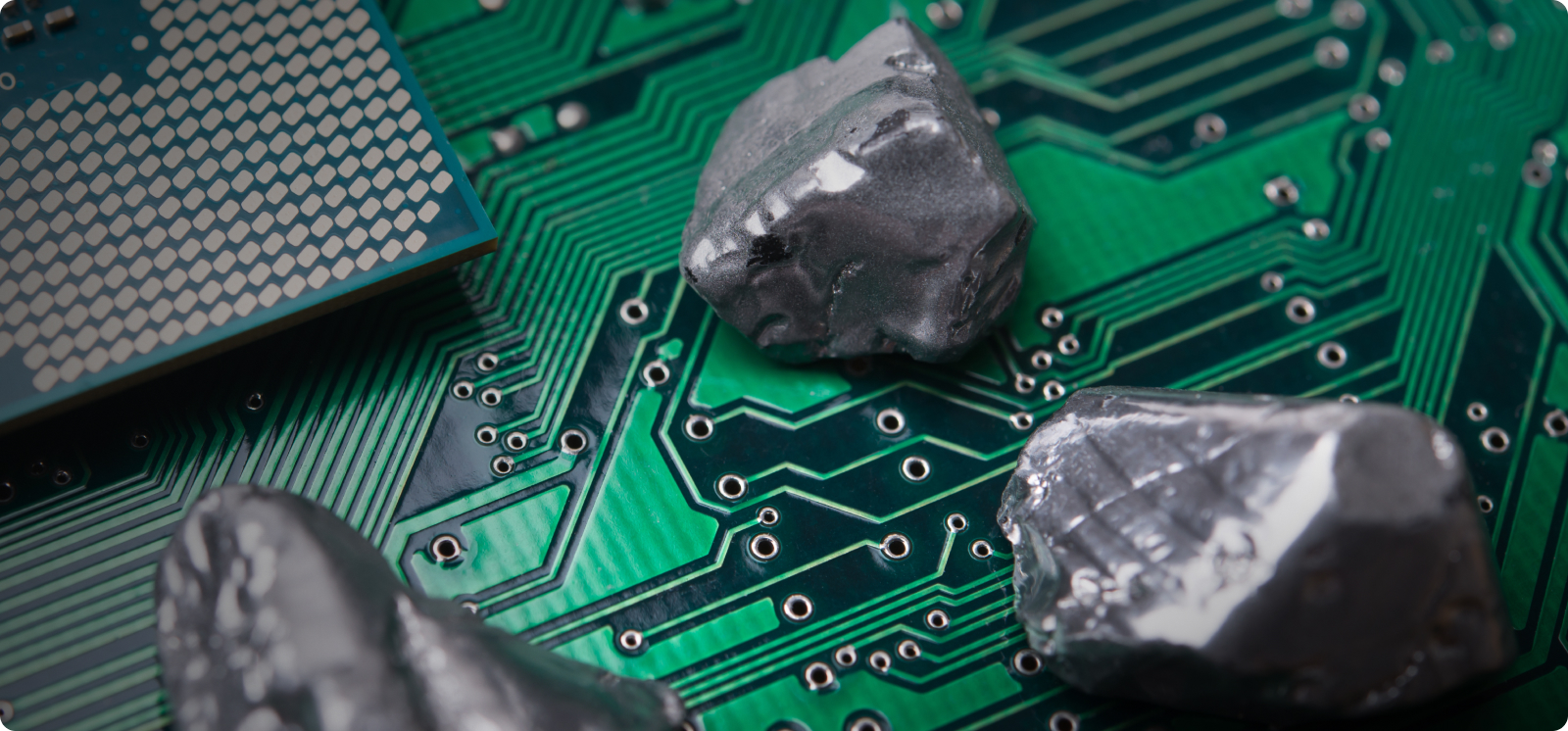
- Yttrium oxide costs about 128 times more outside China than inside it, and Japan could run out within months
- GM canceled its deal with a new US rare-earth magnet plant
- Gold fell below $4,000 for the first time since July as margin calls forced selling
- Moody’s cut Botswana’s rating again as the diamond slump weighs on its economy
- Marathon Fusion claims it turned mercury into gold at 10 times CERN’s rate, without showing how much
Farmland
- Quebec’s strategic maple syrup reserve will be fully depleted by February after a US buying spree
- USDA will send farmers $8 billion for diesel costs as fuel averages about $6.30 a gallon
- Anthropic’s first Australian data center is rising on Queensland farm land next to a 24,000-head feedlot
- Chipotle’s venture fund backed IMIO’s $12 million round for microbes that break down crop waste
- Forecasters see the strongest El Niño in 25 years, with cocoa, coffee and palm oil among the crops exposed
Why it matters: Canada’s syrup vault is empty
Canada keeps a strategic reserve for maple syrup. It’s about to hit zero.
Quebec’s producer association says the reserve will be fully depleted by the end of February, with the remaining stock already sold.
The buyer is mostly America. Exports to the US rose 17% from 2024 to 2025, and the US takes more than 60% of Canada’s exports.
Buyers’ inventories grew by more than 35 million pounds, and Fortune ties the hoarding to the US and Canada trade fight.
Canada produced 75% of the world’s maple syrup in 2025, and Quebec made 90% of that.
The reserve has drawn attention before. Thieves siphoned about 3,000 tons from it in 2011 and 2012, a heist worth nearly C$20 million.
One province controls most of global supply, so one bad spring hits everyone. The reserve exists to smooth bad harvests, and next season starts with nothing in it.
The association doesn’t expect a shortage yet because warehouses are full. That makes the 2027 sugaring season the real test.
Watch spring weather in Quebec. A short, warm season with an empty reserve is how syrup prices jump.
Wine, Whiskey, and Spirits
- Henry Tang’s cellar fetched HK$50.2 million at Christie’s, with nearly half of buyers millennials or Gen Z
- A Macallan 1926 sold for £2.125 million at Sotheby’s first sale at the distillery, just shy of the record
- Spirits wholesaler Amber Beverage UK collapsed into administration after a sale attempt failed
- Moët Hennessy’s nine-month sales rose 5% organically as LVMH’s overall growth slowed
Why it matters: Young collectors are buying old Burgundy
Fine wine has been in a slump. One Hong Kong cellar just sold like it’s 2021.
The collection of former Hong Kong chief secretary Henry Tang made HK$50.2 million, about $6.4 million, against an estimate of HK$30 million.
Christie’s called it 100% sold, with about 80% of lots clearing their high estimates over a 13-hour auction.
A magnum of 1971 Romanée-Conti led at about $111,500, followed by an imperial of 1996 La Tâche at about $87,600.
The surprise was the bidders. Almost half were millennials or Gen Z, and close to 70% of that group were new buyers.
The next generation is arriving. Younger buyers are starting with trophy bottles.
Sotheby’s head of whisky sees only early signs of stabilization after whisky prices fell 10.9% in 2025.
Single-owner sales are where demand looks strongest, which is why auction houses chase these collections.
See you next time, Stefan
Disclosures
- This issue is sponsored by City Transformer. It contains no affiliate links.